Imagining Life after Capitalism | FreshEd podcast with Tim Jackson
In this podcast Will Brehm and Tim Jackson talk about the power of ideas and imagine what life might look like after capitalism. In his new book, Post Growth: Life after capitalism, Tim shows the limits of the dominant metaphors used to explain our current world and argues for new metaphors to help imagine a sustainable, just, and creative future.
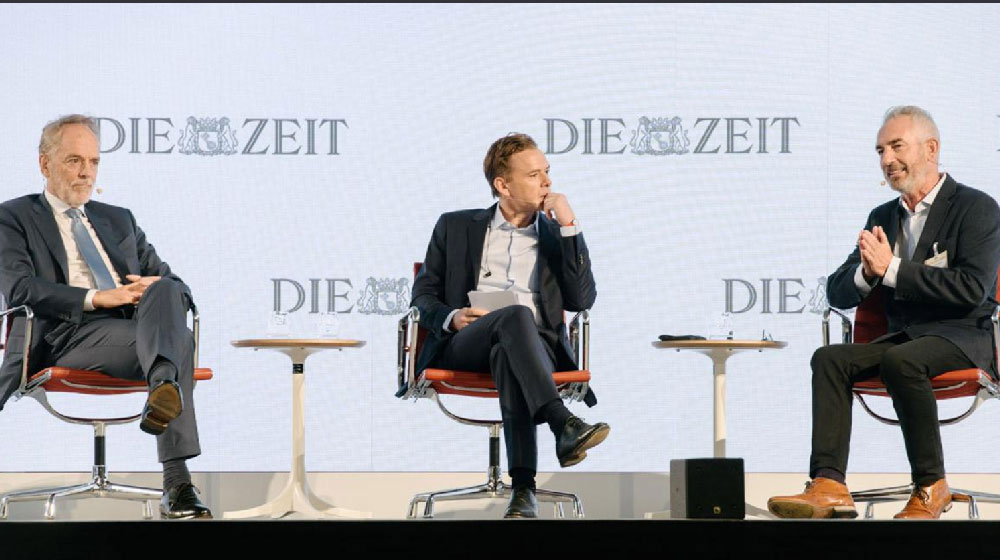
Video | Ökonomie jenseits der Schwäbischen Hausfrau
Conversation with Mathew D. Rose as part of the event series “Ökonomie jenseits der Schwäbischen Hausfrau”, hosted by Brave New Europe, Helle Panke eV and the Rosa Luxemburg Stfitung. More details via the Brave New Europe website.
Welfare systems without economic growth | Review paper
Welfare systems across the OECD face many combined challenges, with rising inequality, demographic changes and environmental crises likely to drive up welfare demand in the coming decades. Economic growth is no longer a sustainable solution to these problems. It is therefore imperative that we consider how welfare systems will cope with these challenges in the absence of economic growth. This paper by Christine Corlet Walker, Angela Druckman together with Tim Jackson reviews the literature tackling this complex problem.
Worker wellbeing and productivity in advanced economies: Re-examining the link | Journal paper
Labour productivity is a key concept for understanding the way modern economies use resources and features prominently in ecological economics. Ecological economists have questioned the desirability of labour productivity growth on both environmental and social grounds. In this paper we aim to contribute to ongoing debates by focusing on the link between labour productivity and worker wellbeing.
Ensuring a Post-COVID Economic Agenda Tackles Global Biodiversity Loss | Journal Paper
The COVID-19 pandemic has caused dramatic and unprecedented impacts on both global health and economies. Many governments are now proposing recovery packages to get back to normal, but the 2019 Intergovernmental Science-Policy Platform for Biodiversity and Ecosystem Services Global Assessment indicated that business as usual has created widespread ecosystem degradation. Therefore, a post-COVID world needs to tackle the economic drivers that create ecological disruptions.
Podcast | Curb excess capitalism to save nature |@BBC5Live with Tim Jackson
The possibility that we can live better, healthier and more fulfilling lives without the relentless consumption that damages the planet was one of the points of discussion when BBC presenter Nihal Arthanayake invited CUSP Director Tim Jackson and Policy Exchange analyst Benedict McAleenan to discuss the implications of Sir David’s remarks on Radio 5 Live’s Afternoon Edition today. Good lives don’t have to cost the earth. It’s time for capitalism to recognise that.
The Transition to a Sustainable Prosperity | Journal Paper by Tim Jackson and Peter Victor
This paper presents a stock-flow consistent (SFC) macroeconomic simulation model for Canada. Contrary to the widely accepted view, the results suggest that ‘green growth’ (in the Carbon Reduction Scenario) may be slower than ‘brown growth’. More importantly, we show (in the Sustainable Prosperity Scenario) that improved environmental and social outcomes are possible even as the growth rate declines to zero.
Using critical slowing down indicators to understand economic growth rate variability and secular stagnation | NATURE paper
Global economic stability could be difficult to recover in the wake of the Covid-19, this Nature article finds. Even before the Covid-19 crisis, many of the world’s leading economies were experiencing larger slower growth cycles (recession cycles), suggesting precisely such a period of critical slowing down in the economic system. This analysis suggests that the added weight of the Covid-19 crisis may result in one of the weakest and most unstable recoveries in recorded history for many economies.
Video | How can we build back better after COVID? | Panel discussion w/ Tim Jackson, Mariana Mazzucato, Michael Marmot and David King
Set out to engage MPs across the political spectrum, the online discussion was chaired by Krishnan Guru-Murthy (Channel 4), and expertly deliberated on the prospects for a socially and environmentally just economic recovery—which takes into account not only the need to prevent the worst of climate breakdown, but does so in a way that sustainably strengthens the wellbeing of people. Discussants were CUSP director Prof Tim Jackson, Prof Mariana Mazzucato (UCL), Sir Prof Michael Marmot (UCL) and Sir David King (former Government Chief Scientist).
Biodiversity in a post-growth environment | Evidence submission to the EAC Possible Future Inquiry
In early Spring this year, written submissions were invited to aid the Committee in prioritising its future programme of work. CUSP director Tim Jackson submitted evidence, making the case for necessary innovations in governance and a realistic and responsible approach to the management of the economy: Sustainable Development Goals and the 2050 Vision for Biodiversity cannot be achieved without transformative change, the conditions for which have to be put in place now.
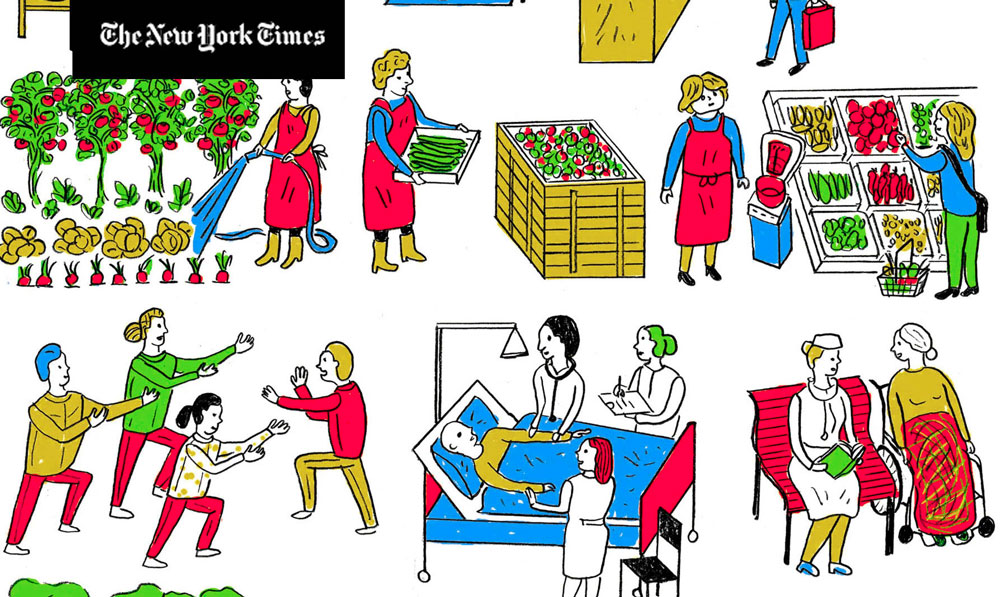
Let’s be less productive—Restoring the value of care | Opinion piece for The New York Times
The challenges facing the world and the UK today are unprecedented. A global health emergency, a global climate crisis, and a catastrophic loss of biodiversity are undermining the basis for future prosperity in the UK and across the world. This article, written for The New York Times in 2012, speaks to the theme of restoring the value of decent work to its rightful place at the heart of society.
Energy and Productivity—A Review of the Literature | Paper
The UK is experiencing a period of low productivity growth. Although exacerbated by the financial crisis of 2008, the underlying trend is longer and more persistent. This report aims to expand conventional understandings of productivity by exploring the literatures which relate productivity to the availability, production and use of energy in the economy.
Towards a Wellbeing Economy | EESC calls for a new vision of prosperity
The European Economic and Social Committee overwhelmingly adopted an ‘own-initiative opinion’ on the sustainable and inclusive ‘wellbeing economy’ that Europe needs. A call on the EU 'for a new vision of prosperity', developed in close collaboration with CUSP director Tim Jackson as Expert to the Rapporteur.
Unravelling the claims for (and against) green growth | Science Article by Tim Jackson and Peter Victor
It is clear that the larger the economy becomes, the more difficult it is to decouple that growth from its material impacts... This isn't to suggest that decoupling itself is either unnecessary or impossible. On the contrary, decoupling well-being from material throughput is vital if societies are to deliver a more sustainable prosperity—for people and for the planet. (This article is posted on the Science website).
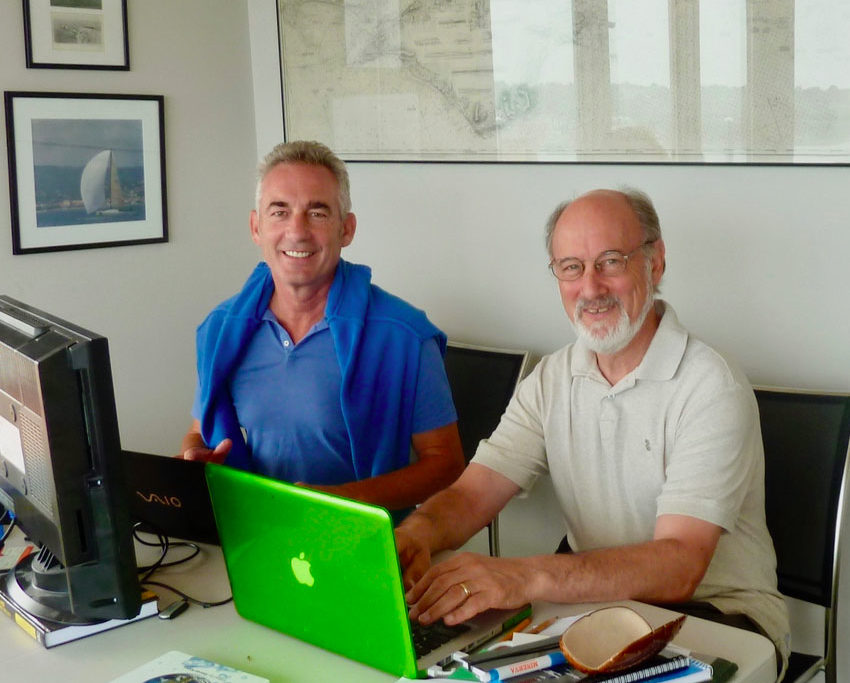
LowGrow SFC—A stock-flow-consistent ecological macroeconomic model for Canada | Paper
This working paper by Tim Jackson and Peter Victor presents a stock-flow consistent (SFC) simulation model of a national economy, calibrated on the basis of Canadian data. LowGrow SFC describes the evolution of the Canadian economy in terms of six financial sectors. Contrary to the accepted wisdom, the results indicate the feasibility of improved environmental and social outcomes, even as the growth rate declines to zero.
The storied state of economics: Review of Robert Shiller’s Narrative Economics | By Tim Jackson
“Economists are tellers of stories and makers of poems,” wrote the economic historian Deidre McCloskey in 1990. It’s a curious observation for a profession that prides itself on hard-nosed, quantitative analysis and strives continually for predictive power. The Nobel-prizewinning economist Robert Shiller goes even further. His new book probes how social behaviour trumps statistics in determining the fate of economies—Tim Jackson weighs it up.
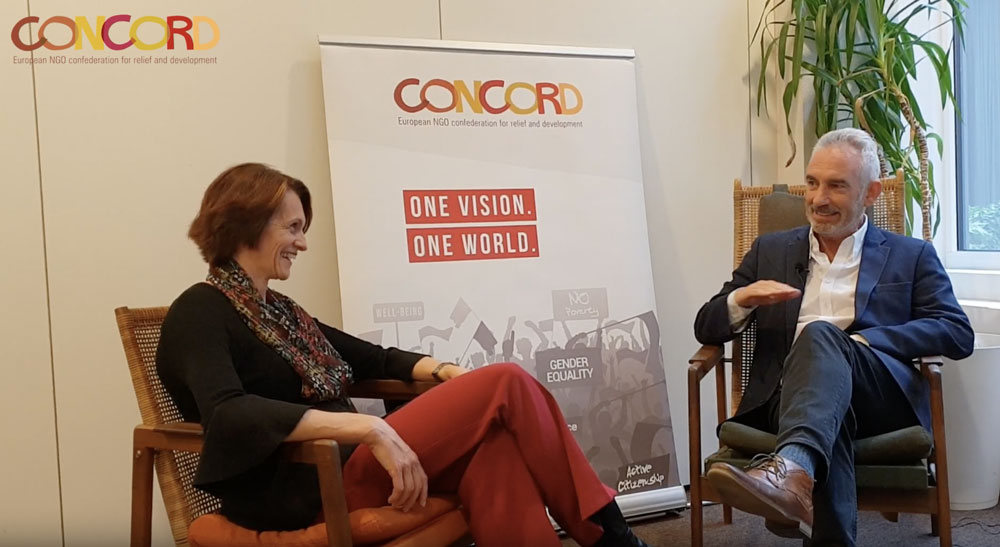
Talking Development | CONCORD Europe Podcast w/ Tim Jackson
“Talking Development” podcasts are a series of podcasts developed by CONCORD Europe aiming at making development topics understandable and accessible to all. Here, Tim is discussing the politics and economics of the postgrowth challenge with Tanya Cox, Director of CONCORD, the European NGO confederation for relief and development.
Measuring Prosperity—Navigating the Options | Paper
Since its development in the 1930s, GDP has been the most widely used measure of the health and progress of an economy, being adopted as the principal policy objective of countless national and international bodies across the world. Its many shortcomings as a measure of progress are well documented, and the alternative indicators of progress developed in response to these shortcomings have been diverse and numerous. This paper synthesises the literature, highlighting the importance of context and purpose in determining what makes a ‘good’ indicator.
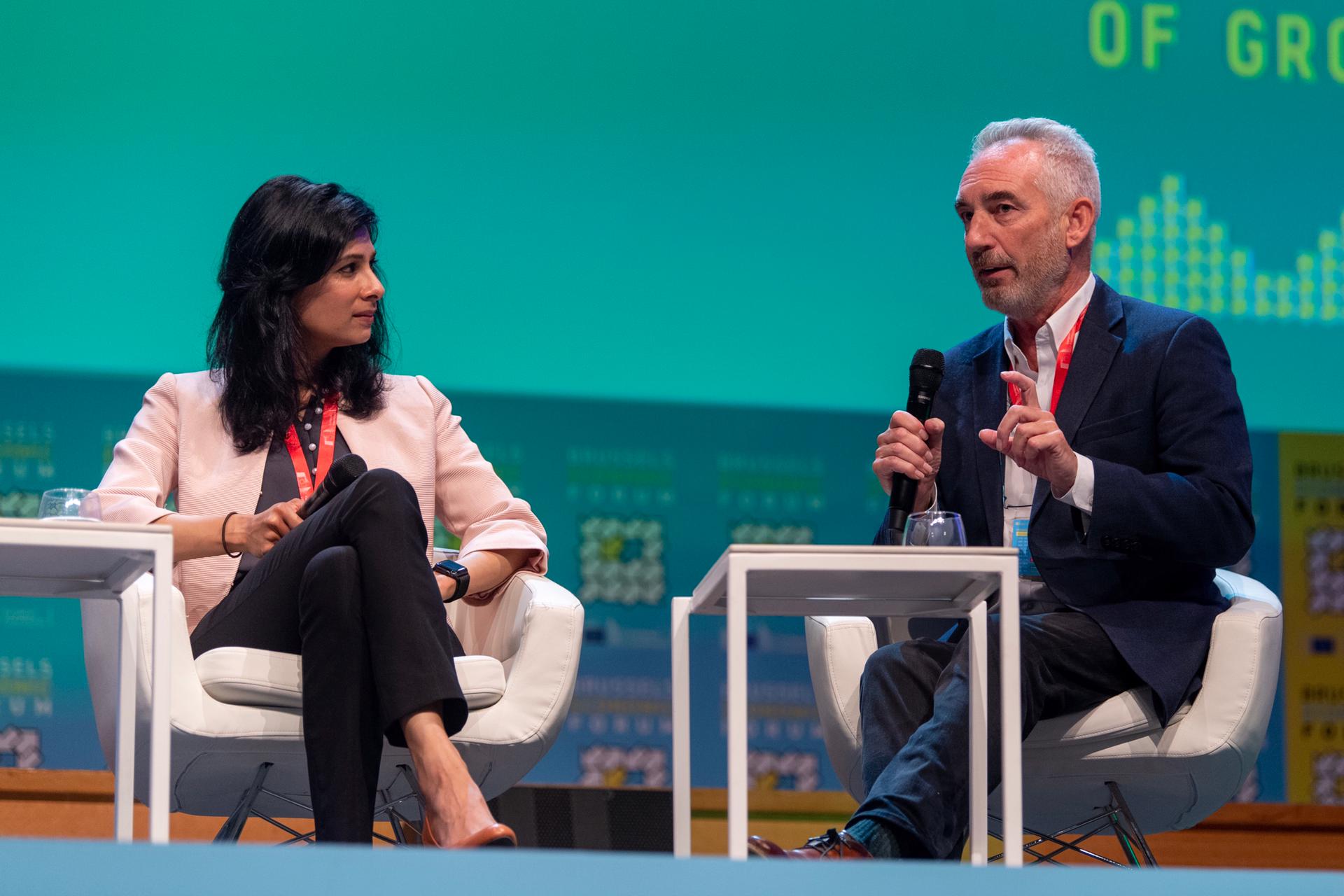
A new kind of Growth for Europe? | Tim Jackson at the 2019 Brussels Economic Forum
Tim Jackson in fierce debate with high-profile panel on prospects in the EU for reconciling economic growth with social cohesion, fairness and sustainability. Moderated by Viktoria Dendrinou (Bloomberg), co-discussants include Valdis Dombrovskis (Vice-President, European Commission), Nadia Calviño (Minister of Economy and Business, Spain), Gita Gopinath (Chief Economist, International Monetary Fund) and Riccardo Illy (Chairman, Gruppo Illy).
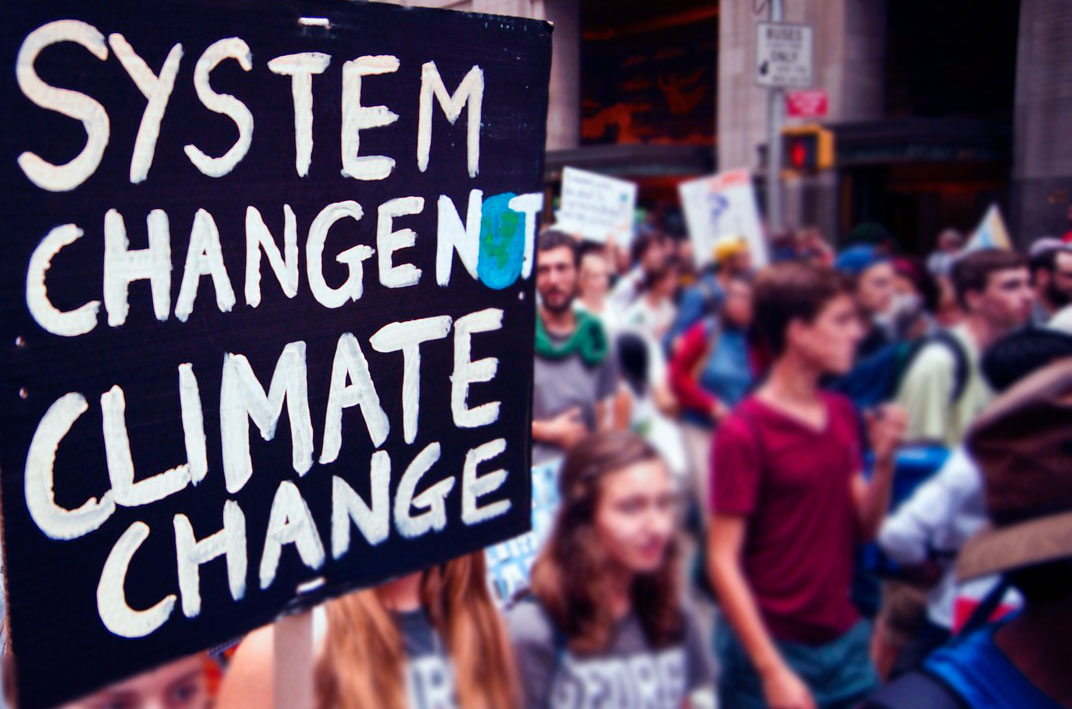
‘Whatever it takes’—the new economics of system change
‘System change, not climate change’ is the mantra for a new politically-charged ecological activism. In the wake of two key economic conferences, Tim Jackson reflects on what this means for the financial and political stability of Europe.—"It matters not a jot that you do ‘whatever it takes’ to save the banks, if you fail to do whatever it takes to save the climate."
Green, prosperous and fair: a vision for Europe’s future
After the most profound shake-up in decades, European politics stands at a pivotal point in its long history. With nationalist parties drawing support from communities who have been left behind and green parties benefiting from a huge upsurge of concern around climate breakdown and biodiversity loss, there is a unique opportunity, argues Tim Jackson, to build a new vision for Europe that is green, prosperous and fair.
Managing a Post-Growth Economy: Circularity, Productivity and Inequality
“The circular economy is a very good idea, but it is a better idea when it is placed in the context of delivering prosperity, rather than aimed at increasing growth.” A conversation between Emanuele Di Francesco and Tim Jackson, discussing post-growth concepts of a circular economy, the limits of labour productivity and the dynamics of inequality.
How the light gets in—The science behind growth scepticism
The Entropy Law still matters. CUSP director Tim Jackson responds to Michael Liebreich’s essay on the ‘The secret of eternal growth’.—"Because we are intelligent does not mean that there is no such thing as limits. We cannot usefully ‘imagine’ the available carbon budget to be bigger than it actually is. Our ‘wonder’ will not in itself preserve the species lost precipitously in recent decades in the relentless pursuit of eternal growth."
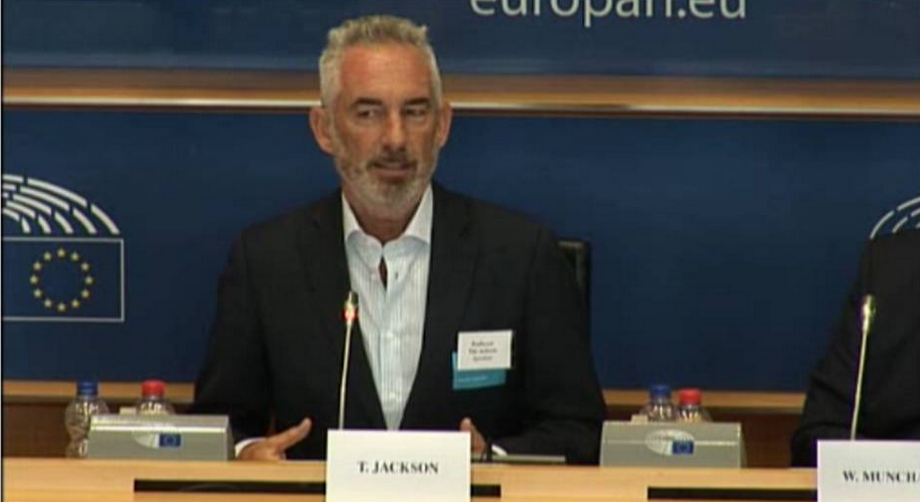
Rethinking Economic Policy in the EU | First Postgrowth conference at EU parliament
Scientists, politicians, and policymakers gathering in Brussels for landmark conference: Hosted at the EU parliament, the multi-stakeholder event is exploring visions and solutions for a post-growth economy in Europe. An accompanying petition calling on the EU and its member states to plan for a postgrowth future is now published in leading newspapers all over Europe.
LowGrow SFC: An ecological macroeconomic simulation model
System dynamics model by Tim Jackson and Peter Victor is live now, developing sustainable prosperity scenarios for the Canadian economy out to 2067. LowGrow SFC is part of a suite of system dynamics models developed by Tim Jackson and Peter Victor, including SIGMA, which addresses the key challenge of inequality in the context of declining growth rates; and FALSTAFF, which explores the financial and economic dimensions of a post-growth economy.