Postgrowth 138 results

Imagining life after capitalism | Radio NZ with Kim Hill

Tim Jackson was invited onto the Radio NZ Saturday Morning programme with Kim Hill to discus post-growth economics, staggering inequalities legitimated by the trickle-down ideology, and the motivation for his most recent book Post Growth-life after capitalism.

Without health there is no wealth. Why do so few governments understand this?—The Guardian Opinion

Politicians are wrong to believe that we can only afford decent care in good economic times, Tim Jackson writes. Without health there is no wealth. Without care there is no health. Care is investment. It’s not a luxury consumer item.

BBC Radio 4 Rethink Series | Green economy, money and prosperity

What may switching to a green economy mean for the way we live and work and is it compatible with economic growth? Together with his invited guests and co-hosts, Amol Rajan is exploring key questions around money, prosperity and the green economy.

Degrowth can work—here’s how science can help | Nature Article

Wealthy countries can create prosperity while using less materials and energy if they abandon economic growth as an objective. This Nature comment piece together with Jason Hickel, Giorgos Kallis, Julia Steinberger and more is laying out the key challenges of a just post-growth transition.

2022 Eric Zencey Prize in Ecological Economics for Tim Jackson’s book Post Growth: Life after Capitalism

Tim Jackson has been awarded the 2022 Eric Zencey Prize in Ecological Economics for his book Post Growth: Life after Capitalism. The prize celebrates outstanding writing on the environmental limits of a finite planet. 

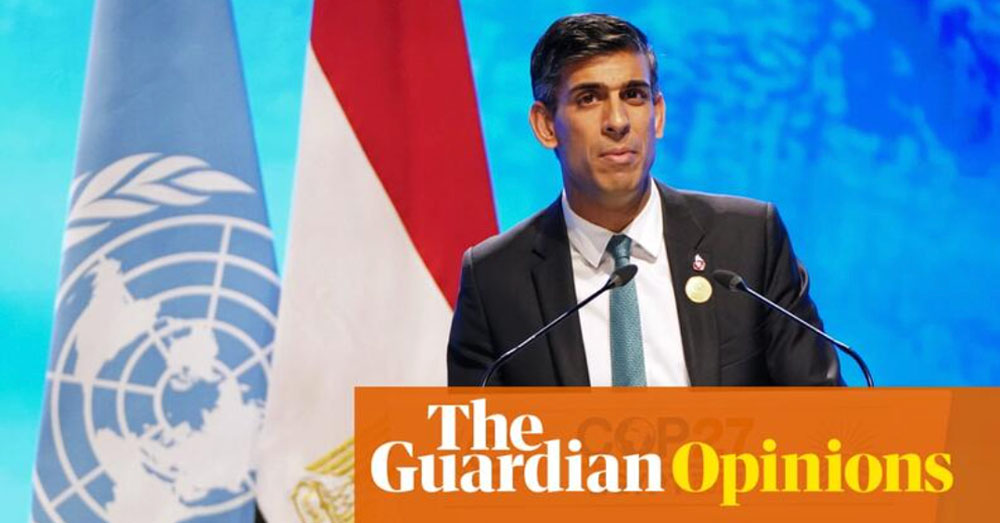
Sunak’s growth fetish is a problem: he’s heading for the same budget trap as Truss | The Guardian Opinion piece

The siren call of climate-burning expansion bewitches British politics. More of the same will emerge in the autumn statement, Tim Jackson writes. To all intents and purposes, we’re already living in a post-growth world. And it’s time to take that challenge seriously.

Is it time to rethink endless economic growth?—Guardian Science Weekly Podcast

In the Cop27 special, Ian Sample speaks to Tim Jackson about the myth of eternal growth, other ways to think about progress and prosperity, and what an economic system in balance with our planetary system might look like.

Economic Growth—can we ever have enough? | BBC Radio 4 Analysis

As the twin storms of economic turmoil and worsening climate change grip the the world, BBC Radio 4 Analysis examines the future of economic growth. Does it offer a route out of economic malaise, or have its benefits reached a ceiling for developed countries?

Moving beyond GDP is key to tackling a world in crisis | By Paul Allin, Diane Coyle and Tim Jackson

Gross domestic product remains the predominant measure of progress across the world, it's time to change that, write Paul Allin, Diane Coyle and Tim Jackson. Amid the global threats posed by climate change, spiralling energy costs, insecure employment and widening inequality, the need to rethink our notion of progress is now an urgent priority.

Video: 50th Anniversary of The Limits to Growth—What has the EU learned and where do we go from here?

Roundtable event with Dennis Meadows, Robert Costanza, Kate Raworth, and Tim Jackson; contributing to the theme of post-growth thinking within the EU institutions and across EU Member States.

Why UK’s ‘treasured free-market economy’ will not achieve net zero

Whatever the UK government says it’s doing—and not doing—one thing is clear, Tim Jackson writes, the “treasured free-market economy” is never going to compensate for our failure to insulate people’s homes against the cold, and the future against the ravages of climate change.

Is our obsession with GDP killing the climate?—BBC World Service with Tim Jackson, Kate Raworth, Jayati Ghosh and Celestin Monga

BBC World Service's The Climate Question discussing the implications and interdependencies of the GDP growth imperative.

Land is the new frontier to greenwash corporate sins | Letter to the Financial Times

Letter by John Meadley and CUSP director Tim Jackson to the Financial Times, highlighting the urgent need for decent land use policy, to prevent the same predatory financial practices prevalent in the social care sector from taking hold in rural communities too.

Aligning the UK’s economic goals with environmental sustainability | EAC inquiry

On 9 February 2022, CUSP director Tim Jackson gave oral evidence to the Environmental Audit Committee on their beyond GPD inquiry, addressing questions around growth dependency and the limitations of the 'inclusive wealth' concept.

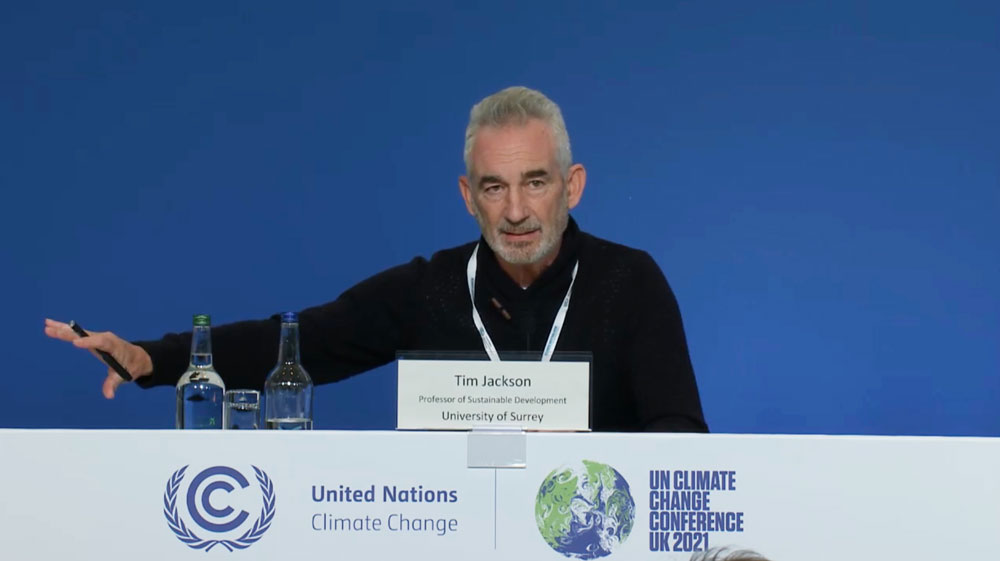
World Scientists Warning into Action—Tim Jackson in conversation with Ed Gemmell at #COP26

Press conference on post-growth economics, zero carbon sooner and the climate economics challenge at #COP26. Hosted by Scientists Warning Europe, 5 November 2021.

Why health should replace wealth as the heart of prosperity | Blog by Tim Jackson and Julian Sheather

The economic system to which we are in thrall throws us out of balance, Tim Jackson and Julian Sheather write in this blog. By failing to meet our most essential needs it is doomed to immiserate and, ultimately, sicken us. We urgently need to regain a richer, more satisfying understanding of ourselves, and our place in the world. (This article first appeared on the BMJ website.)

Earth vs Growth | Economic Observatory Blog by Tim Jackson

Carbon efficiency is improving, but far too slowly to offset climate change. We need to get beyond our relentless pursuit of growth, writes Tim Jackson for the Economics Obersavatory ahead of COP26. Only a few economists – and even fewer politicians – have challenged the primacy of economic growth. But being frightened to scare the horses is no way to win the race against climate change.

Book launch: Wie wollen wir leben?—Tim Jackson in conversation with Barbara Unmüßig

On 18 October 2021, Tim Jackson talks to Barbara Unmüßig, director of the Heinrich Böll Foundation, about the German edition of his latest book Post Growth—’Wie wollen wir leben?’ (Oekom, 2021). The book is not just a manifesto for system change, but an invitation to rekindle a deeper conversation about the nature of the human condition.

Materialistic values, flow experiences and the role of self-regulatory resources | Journal Paper

Previous research has shown that the possession of materialistic values can lead individuals to be less likely to experience flow, an important component of well-being. This study tested whether a lack of self-regulatory resources, and a tendency to use self-regulatory resources for avoidance purposes, can mediate this relationship.

Billionaire space race: the ultimate symbol of capitalism’s flawed obsession with growth

Now is not the time to abandon spaceship Earth, Tim Jackson writes in his essay for The Conversation UK Insights Series. Let’s dream of some “final frontier” by all means. But let’s focus our minds too on some quintessentially earthly priorities.

Tackling growth dependency—the case of adult social care | Report and Briefing

Paper by Christine Corlet Walker and Tim Jackson, presenting a systematic approach to identifying, analysing and transforming growth dependencies in the welfare state. Using adult social care as the case study, the paper explores how growing demand, rising costs and rent seeking can create growth dependencies.

Outrage and Optimism | Podcast with Tim Jackson, Christiane Figueres and Johan Rockström

Listen in for a sobering, gripping, and stubbornly optimistic conversation about the most decisive decade in human history. How can we change the stories we tell ourselves, to engage, inspire and empower people toward climate action?

Inside Impact Investing | Triodos Podcast

Impact investing is a driving force in the transition to a more inclusive and sustainable world. In this podcast series, Tim Jackson and Hans Stegeman discuss the shortcomings of our current economic system and explore how the financial sector can play a crucial role in providing the capital needed to realise real and profound change.

INET podcast on Life after Capitalism | Tim Jackson in conversation with Rob Johnson

INET's Executive Director Rob Johnson talks with Jackson about his new book, "Post Growth: Life after Capitalism," and how we might break free of the cycle of restrictive thinking which has plagued economics, and the world.

Is there life after the growth imperative? | RSA Bridges to the Future Podcast

Is relentless economic growth the best way to measure human progress? Tim Jackson in conversation with Matthew Taylor as part of the RSA 'Bridges to the Future' podcast series, putting "practitioners on the spot by asking for one big idea to help build effective bridges to our new future."

Is economic growth compatible with solving climate change? | Tim Jackson in conversation with Zeke Hausfather from Breakthrough Institute

Can an economy grow and curb climate emissions? That’s the dual feat that President Joe Biden is trying to accomplish. Economists and environmentalists are split on this question. The World’s host Marco Werman discusses this with climate scientist Zeke Hausfather at The Breakthrough Institute in California, and ecological economist Tim Jackson at the University of Surrey whose book, “Post Growth: Life After Capitalism,” comes out end of May.

Confronting inequality in the “new normal”: Hyper‐capitalism, proto‐socialism, and post‐pandemic recovery | Journal Paper

Post‐pandemic recovery must address the systemic inequality that has been revealed by the coronavirus crisis. The roots of this inequality predate the pandemic and even the global financial crisis. They lie rather in the uneasy relationship between labor and capital under conditions of declining economic growth

Another Europe is Possible Podcast | Do economies always have to grow? The question facing capitalism.

In this podcast, hosts Zoe Williams and Luke Cooper talk to Tim Jackson, about his new book, Post-Growth; Life After Capitalism. Every society in the world shares a fundamental cultural assumption about how our economies work: that growth is good. But what if this is running up against both its material and ecological limits?

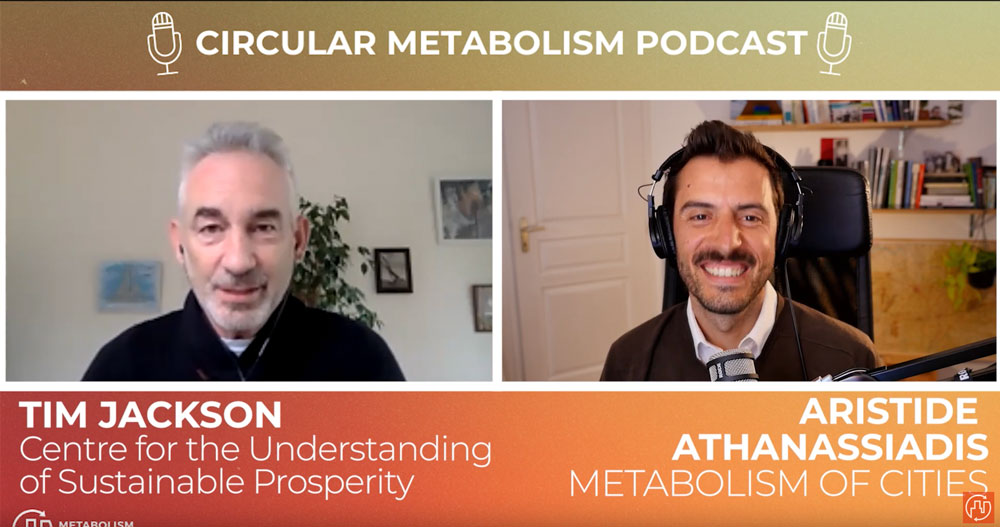
Circular Metabolism | Podcast

The Circular Metabolism podcast is hosted by Aristide Athanassiadis from Metabolism of Cities. In his podcast he interviews thinkers, researchers, policy makers and practitioners to better understand the metabolism of our cities and how to reduce their environmental impact in a socially just and context-specific way.

Imagining Life after Capitalism | FreshEd podcast with Tim Jackson

In this podcast Will Brehm and Tim Jackson talk about the power of ideas and imagine what life might look like after capitalism. In his new book, Post Growth: Life after capitalism, Tim shows the limits of the dominant metaphors used to explain our current world and argues for new metaphors to help imagine a sustainable, just, and creative future.

Video | Ökonomie jenseits der Schwäbischen Hausfrau

Conversation with Mathew D. Rose as part of the event series “Ökonomie jenseits der Schwäbischen Hausfrau”, hosted by Brave New Europe, Helle Panke eV and the Rosa Luxemburg Stfitung. More details via the Brave New Europe website.

Welfare systems without economic growth | Review paper

Welfare systems across the OECD face many combined challenges, with rising inequality, demographic changes and environmental crises likely to drive up welfare demand in the coming decades. Economic growth is no longer a sustainable solution to these problems. It is therefore imperative that we consider how welfare systems will cope with these challenges in the absence of economic growth. This paper by Christine Corlet Walker, Angela Druckman together with Tim Jackson reviews the literature tackling this complex problem.

Careless Finance—Operational and economic fragility in adult social care | CUSP Working Paper

Adult social care across the OECD is in crisis. Covid-19 has exposed deep fragilities. Principal amongst these is the process of marketisation and financialisation of the social care sector. In this paper, we take a critical perspective on this process. We find that marketisation has facilitated the conditions for both financial fragility and operational failure.

COVID-19 pandemic: lessons learned one year on | Tim Jackson in conversation with Al Jazeera

In this short video from Al Jazeera, CUSP Director Tim Jackson breaks down some of the lessons learned from the pandemic, as pressure builds to fix devastating economic inequality.

Worker wellbeing and productivity in advanced economies: Re-examining the link | Journal paper

Labour productivity is a key concept for understanding the way modern economies use resources and features prominently in ecological economics. Ecological economists have questioned the desirability of labour productivity growth on both environmental and social grounds. In this paper we aim to contribute to ongoing debates by focusing on the link between labour productivity and worker wellbeing.

Ensuring a Post-COVID Economic Agenda Tackles Global Biodiversity Loss | Journal Paper

The COVID-19 pandemic has caused dramatic and unprecedented impacts on both global health and economies. Many governments are now proposing recovery packages to get back to normal, but the 2019 Intergovernmental Science-Policy Platform for Biodiversity and Ecosystem Services Global Assessment indicated that business as usual has created widespread ecosystem degradation. Therefore, a post-COVID world needs to tackle the economic drivers that create ecological disruptions.

Podcast | Curb excess capitalism to save nature |@BBC5Live with Tim Jackson

The possibility that we can live better, healthier and more fulfilling lives without the relentless consumption that damages the planet was one of the points of discussion when BBC presenter Nihal Arthanayake invited CUSP Director Tim Jackson and Policy Exchange analyst Benedict McAleenan to discuss the implications of Sir David’s remarks on Radio 5 Live’s Afternoon Edition today. Good lives don’t have to cost the earth. It’s time for capitalism to recognise that.
Podcast | Covid unemployment: a new crisis?—BBC World Service with Tim Jackson

Millions have been left without work as the coronavirus pandemic continues to devastate economies across the globe. How does surging unemployment complicate the global response to the pandemic? Dan Damon and a panel of experts discuss what should be done for the BBC World Service.

The Transition to a Sustainable Prosperity | Journal Paper by Tim Jackson and Peter Victor

This paper presents a stock-flow consistent (SFC) macroeconomic simulation model for Canada. Contrary to the widely accepted view, the results suggest that ‘green growth’ (in the Carbon Reduction Scenario) may be slower than ‘brown growth’. More importantly, we show (in the Sustainable Prosperity Scenario) that improved environmental and social outcomes are possible even as the growth rate declines to zero.

Recovery or Renewal? Time for an economic rethink | Blog with Craig D Rye

A recent study of long-term fluctuations in economic growth published in Nature Scientific Reports suggests both danger and opportunity in the emerging debate about post Covid-19 economic recovery. In this blog, Craig D. Rye and Tim Jackson outline the findings.