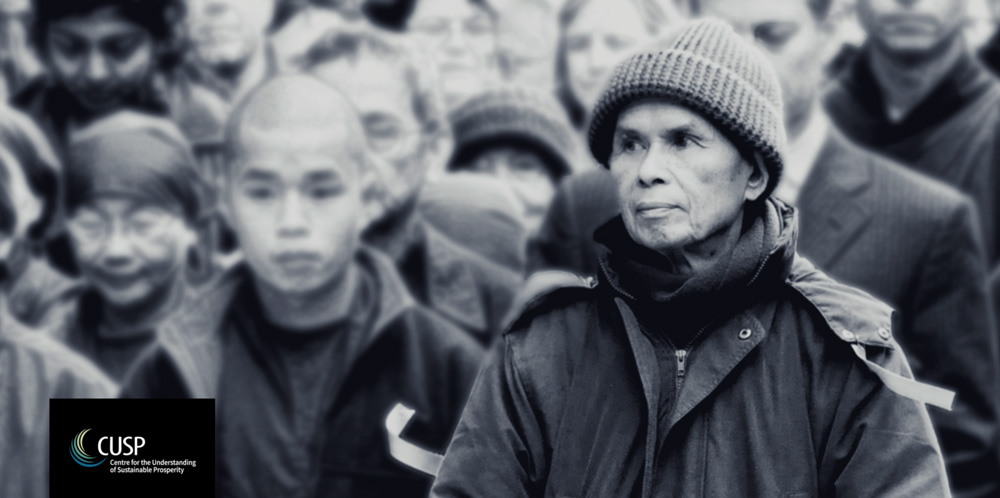
CUSP Director Tim Jackson reflects on the life of and work of the late Thich Nhat Hanh and its relevance for contemporary debates about the meaning of prosperity and power. (This blog first appeared on the CUSP website.)
The Vietnamese Buddhist monk, writer and peace activist Thich Nhat ...
In this article, Amy Isham and Tim Jackson explore the dynamics of a psychological state known as flow. By synthesising the results of a series of experience sampling, survey, and experimental studies, we identify optimal activities that are shown to have low environmental costs and high levels of human wellbeing.
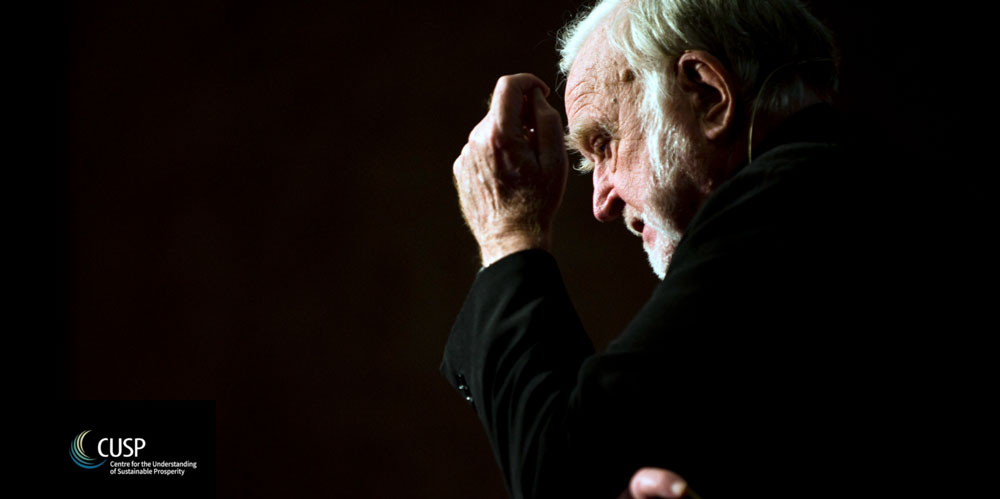
Professor Mihaly ‘Mike’ Csikszentmihalyi was one of the founders of the positive psychology movement and father of the concept of ‘flow’. His death last month at the age of 87 marks the passing of a rare and visionary scientist. In this blog, Amy Isham and Tim Jackson reflect upon his life and legacy.
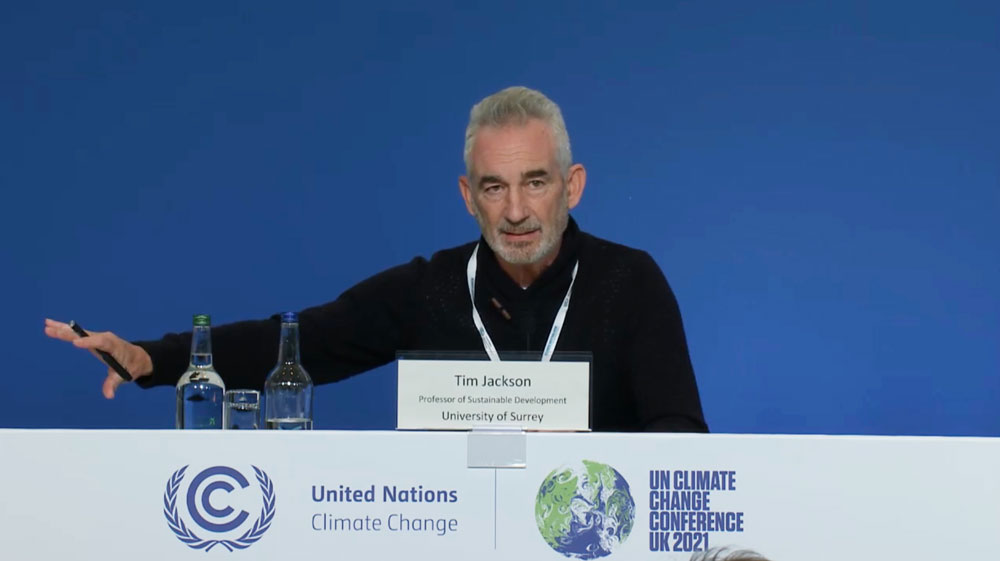
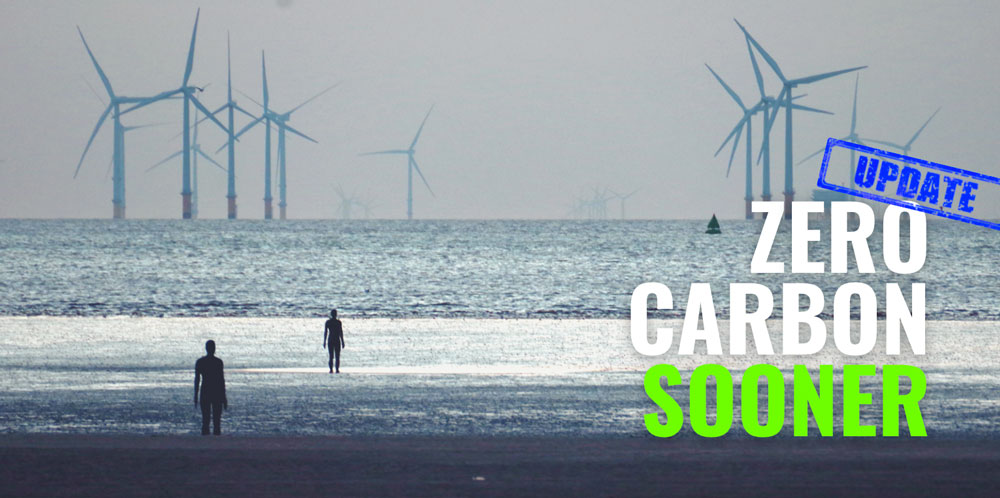
Press conference on post-growth economics, zero carbon sooner and the climate economics challenge at #COP26. Hosted by Scientists Warning Europe, 5 November 2021.
The economic system to which we are in thrall throws us out of balance, Tim Jackson and Julian Sheather write in this blog. By failing to meet our most essential needs it is doomed to immiserate and, ultimately, sicken us. We urgently need to regain a richer, more satisfying understanding of ourselves, and our place in the world. (This article first appeared on the BMJ website.)
Carbon efficiency is improving, but far too slowly to offset climate change. We need to get beyond our relentless pursuit of growth, writes Tim Jackson for the Economics Obersavatory ahead of COP26. Only a few economists – and even fewer politicians – have challenged the primacy of economic growth. But being frightened to scare the horses is no way to win the race against climate change.
This paper is an update of an earlier briefing note, revised to take account of new findings from the IPCC’s updated 6th Assessment Report (AR6). The broad aim of the paper is to establish how soon the UK should aim for (net) zero carbon emissions.
On 18 October 2021, Tim Jackson talks to Barbara Unmüßig, director of the Heinrich Böll Foundation, about the German edition of his latest book Post Growth—’Wie wollen wir leben?’ (Oekom, 2021). The book is not just a manifesto for system change, but an invitation to rekindle a deeper conversation about the nature of the human condition.
Previous research has shown that the possession of materialistic values can lead individuals to be less likely to experience flow, an important component of well-being. This study tested whether a lack of self-regulatory resources, and a tendency to use self-regulatory resources for avoidance purposes, can mediate this relationship.
Now is not the time to abandon spaceship Earth, Tim Jackson writes in his essay for The Conversation UK Insights Series. Let’s dream of some “final frontier” by all means. But let’s focus our minds too on some quintessentially earthly priorities.
Paper by Christine Corlet Walker and Tim Jackson, presenting a systematic approach to identifying, analysing and transforming growth dependencies in the welfare state. Using adult social care as the case study, the paper explores how growing demand, rising costs and rent seeking can create growth dependencies.
Listen in for a sobering, gripping, and stubbornly optimistic conversation about the most decisive decade in human history. How can we change the stories we tell ourselves, to engage, inspire and empower people toward climate action?
Wangari Maathai’s is just one of the many stories that have brought inspiration to Tim (and to countless others, of course) in the last decades. So it was to her and to others that he turned, when he sat down to write Post Growth – life after capitalism, which has just been published by Polity.
INET's Executive Director Rob Johnson talks with Jackson about his new book, "Post Growth: Life after Capitalism," and how we might break free of the cycle of restrictive thinking which has plagued economics, and the world.
Is relentless economic growth the best way to measure human progress? Tim Jackson in conversation with Matthew Taylor as part of the RSA 'Bridges to the Future' podcast series, putting "practitioners on the spot by asking for one big idea to help build effective bridges to our new future."
Can an economy grow and curb climate emissions? That’s the dual feat that President Joe Biden is trying to accomplish. Economists and environmentalists are split on this question. The World’s host Marco Werman discusses this with climate scientist Zeke Hausfather at The Breakthrough Institute in California, and ecological economist Tim Jackson at the University of Surrey whose book, “Post Growth: Life After Capitalism,” comes out end of May.
Post‐pandemic recovery must address the systemic inequality that has been revealed by the coronavirus crisis. The roots of this inequality predate the pandemic and even the global financial crisis. They lie rather in the uneasy relationship between labor and capital under conditions of declining economic growth
In this podcast, hosts Zoe Williams and Luke Cooper talk to Tim Jackson, about his new book, Post-Growth; Life After Capitalism. Every society in the world shares a fundamental cultural assumption about how our economies work: that growth is good. But what if this is running up against both its material and ecological limits?
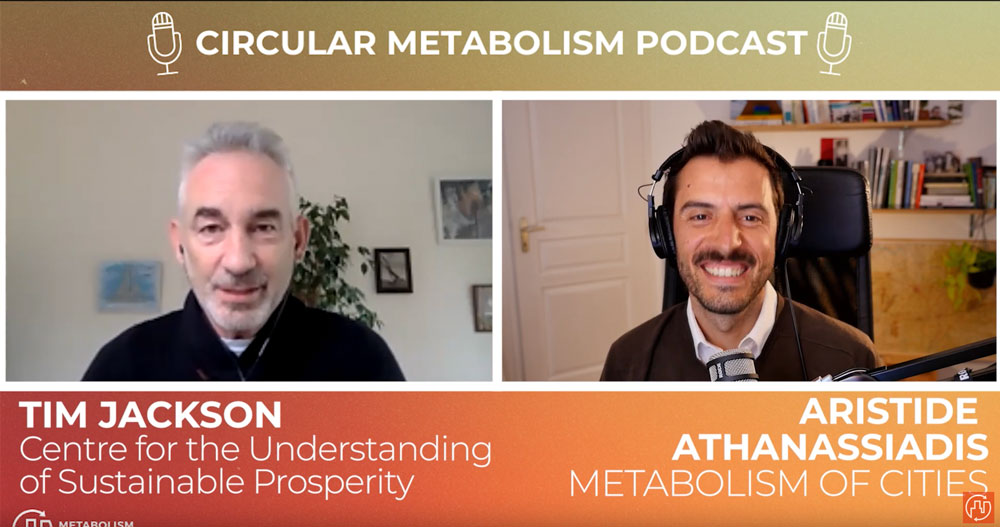
The Circular Metabolism podcast is hosted by Aristide Athanassiadis from Metabolism of Cities. In his podcast he interviews thinkers, researchers, policy makers and practitioners to better understand the metabolism of our cities and how to reduce their environmental impact in a socially just and context-specific way.
In this podcast Will Brehm and Tim Jackson talk about the power of ideas and imagine what life might look like after capitalism. In his new book, Post Growth: Life after capitalism, Tim shows the limits of the dominant metaphors used to explain our current world and argues for new metaphors to help imagine a sustainable, just, and creative future.
Conversation with Mathew D. Rose as part of the event series “Ökonomie jenseits der Schwäbischen Hausfrau”, hosted by Brave New Europe, Helle Panke eV and the Rosa Luxemburg Stfitung. More details via the Brave New Europe website.
Welfare systems across the OECD face many combined challenges, with rising inequality, demographic changes and environmental crises likely to drive up welfare demand in the coming decades. Economic growth is no longer a sustainable solution to these problems. It is therefore imperative that we consider how welfare systems will cope with these challenges in the absence of economic growth. This paper by Christine Corlet Walker, Angela Druckman together with Tim Jackson reviews the literature tackling this complex problem.
Adult social care across the OECD is in crisis. Covid-19 has exposed deep fragilities. Principal amongst these is the process of marketisation and financialisation of the social care sector. In this paper, we take a critical perspective on this process. We find that marketisation has facilitated the conditions for both financial fragility and operational failure.
In this short video from Al Jazeera, CUSP Director Tim Jackson breaks down some of the lessons learned from the pandemic, as pressure builds to fix devastating economic inequality.
The TranSim modelling work shows that the negative effects associated with the transition—recession, stagnation, stagflation, increasing inequality and asset stranding—are positively related to the capital intensity of green energy production and reductions in EROI. Policy makers should pay close attention to the overall EROI of the entire energy system when determining energy policy. If significant reductions in EROI are unavoidable, then policy could be used to mitigate some of its negative economic effects.
Labour productivity is a key concept for understanding the way modern economies use resources and features prominently in ecological economics. Ecological economists have questioned the desirability of labour productivity growth on both environmental and social grounds. In this paper we aim to contribute to ongoing debates by focusing on the link between labour productivity and worker wellbeing.
This working paper summarises the initial findings of a project whose aim has been to develop an agent-based (AB), stock-flow-consistent (SFC) macroeconomic framework to study the economic, financial and social implications of the transition to a net zero carbon economy.
Tim Jackson summarises the recent TRansit project which has pioneered a novel agent-based, stock-flow consistent macro-economic model. Tim discusses the findings from the project and sets them in the context of the Bank of England’s work on ‘transition risk’.
How can nature writing contribute to the common good, we wanted to know? Could writing about nature ‘help generate a collective and popular politics of conservation and connection’—Foreword to the new CUSP online collection of essays on nature, ecological challenges and connections between people and place: “Nature Writing for the Common Good”.
The COVID-19 pandemic has caused dramatic and unprecedented impacts on both global health and economies. Many governments are now proposing recovery packages to get back to normal, but the 2019 Intergovernmental Science-Policy Platform for Biodiversity and Ecosystem Services Global Assessment indicated that business as usual has created widespread ecosystem degradation. Therefore, a post-COVID world needs to tackle the economic drivers that create ecological disruptions.
The possibility that we can live better, healthier and more fulfilling lives without the relentless consumption that damages the planet was one of the points of discussion when BBC presenter Nihal Arthanayake invited CUSP Director Tim Jackson and Policy Exchange analyst Benedict McAleenan to discuss the implications of Sir David’s remarks on Radio 5 Live’s Afternoon Edition today. Good lives don’t have to cost the earth. It’s time for capitalism to recognise that.
Millions have been left without work as the coronavirus pandemic continues to devastate economies across the globe. How does surging unemployment complicate the global response to the pandemic? Dan Damon and a panel of experts discuss what should be done for the BBC World Service.
This paper presents a stock-flow consistent (SFC) macroeconomic simulation model for Canada. Contrary to the widely accepted view, the results suggest that ‘green growth’ (in the Carbon Reduction Scenario) may be slower than ‘brown growth’. More importantly, we show (in the Sustainable Prosperity Scenario) that improved environmental and social outcomes are possible even as the growth rate declines to zero.
The need to locate ways of living that can be both beneficial to personal well-being and ecologically sustainable is becoming increasingly important. Flow experiences show promise for the achievement of personal and ecological well-being. However, it is not yet understood how the materialistic values promoted by our consumer cultures may impact our ability to experience flow.
A recent study of long-term fluctuations in economic growth published in Nature Scientific Reports suggests both danger and opportunity in the emerging debate about post Covid-19 economic recovery. In this blog, Craig D. Rye and Tim Jackson outline the findings.
Global economic stability could be difficult to recover in the wake of the Covid-19, this Nature article finds. Even before the Covid-19 crisis, many of the world’s leading economies were experiencing larger slower growth cycles (recession cycles), suggesting precisely such a period of critical slowing down in the economic system. This analysis suggests that the added weight of the Covid-19 crisis may result in one of the weakest and most unstable recoveries in recorded history for many economies.
Panel discussion with CUSP Director Tim Jackson, Maria Joao Rodrigues (Foundation for European Progressive Studies), Apollonia Miola (OECD) and Meera Ghani (ECOLISE); hosted by Peter Schmidt (EESC).
Set out to engage MPs across the political spectrum, the online discussion was chaired by Krishnan Guru-Murthy (Channel 4), and expertly deliberated on the prospects for a socially and environmentally just economic recovery—which takes into account not only the need to prevent the worst of climate breakdown, but does so in a way that sustainably strengthens the wellbeing of people. Discussants were CUSP director Prof Tim Jackson, Prof Mariana Mazzucato (UCL), Sir Prof Michael Marmot (UCL) and Sir David King (former Government Chief Scientist).
In early Spring this year, written submissions were invited to aid the Committee in prioritising its future programme of work. CUSP director Tim Jackson submitted evidence, making the case for necessary innovations in governance and a realistic and responsible approach to the management of the economy: Sustainable Development Goals and the 2050 Vision for Biodiversity cannot be achieved without transformative change, the conditions for which have to be put in place now.
Al Jazeera ‘Start Here’ programme with CUSP director Tim Jackson, taking an international view on the COVID-19 health and economic crisis—and where to start to ‘build back better’.