The challenges facing the world and the UK today are unprecedented. A global health emergency, a global climate crisis, and a catastrophic loss of biodiversity are undermining the basis for future prosperity in the UK and across the world. This article, written for The New York Times in 2012, speaks to the theme of restoring the value of decent work to its rightful place at the heart of society.
On 12 February this year, a number of student groups within Cambridge University's Christ's College hosted a panel with alumni of Christ's to share their expertise on various aspects of the divestment issue, addressing i.a. economic, historical, and moral perspectives for divestment. Chaired by Alyssa Gilbert, panellists include Tim Jackson, Fiona Harvey and Rowan Williams.
This policy briefing highlights some alternatives to the conventional approach to measuring social progress. It presents a three-fold strategy for moving beyond GDP by: changing the way we measure success; building a consistent policy framework for a ‘wellbeing economy’; and addressing the ‘growth dependency’ of the economy.
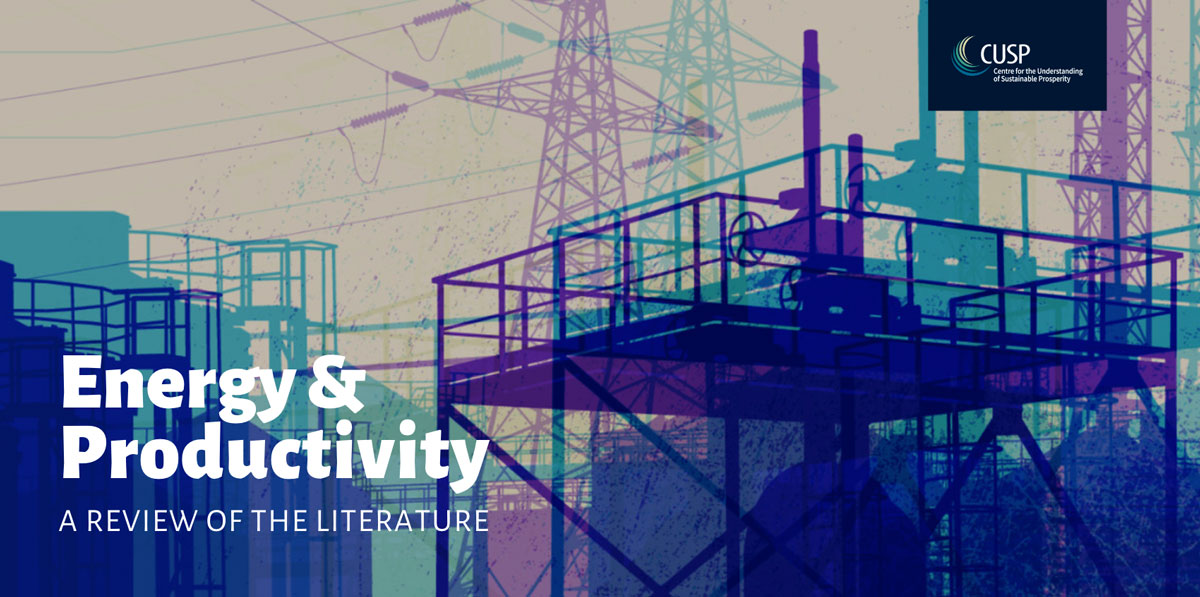
The UK is experiencing a period of low productivity growth. Although exacerbated by the financial crisis of 2008, the underlying trend is longer and more persistent. This report aims to expand conventional understandings of productivity by exploring the literatures which relate productivity to the availability, production and use of energy in the economy.
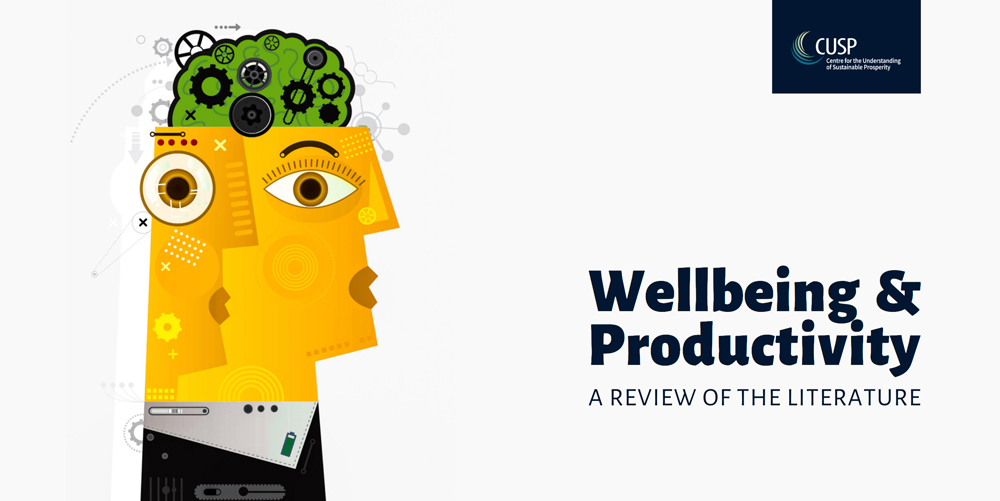
This report reviews the relationships between the different aspects of wellbeing, productivity, and productivity growth. It is the culmination of a desk-based evidence review, survey, and a mapping workshop held with experts from backgrounds including psychology, sociology, economics, and design. The focus is on wellbeing and labour productivity.
The European Economic and Social Committee overwhelmingly adopted an ‘own-initiative opinion’ on the sustainable and inclusive ‘wellbeing economy’ that Europe needs. A call on the EU 'for a new vision of prosperity', developed in close collaboration with CUSP director Tim Jackson as Expert to the Rapporteur.
Under the title Is Growth an Illusion?, Deutsche Bank is hosting an event programme in Davos, accompanying the annual meeting of the World Economic Forum; to discuss the future of growth with leading politicians and internationally renowned experts from various fields. CUSP director Tim Jackson is joining a panel with Christiana Riley and Andrew McAfee.
On 22 January, CUSP director Tim Jackson is joining the opening panel at the 10th ‘Parlement des Entrepreneurs d’Avenir’ at the OECD in Paris. Co-panelists include Anne Hidalgo (Mayor of Paris), Etienne Klein (Physicist and philosopher) and Sir Robert Watson (president of the IPBES). The panel is moderated by Marie-Aline Meliyi.
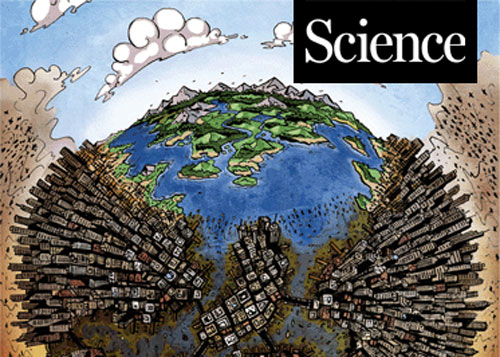
It is clear that the larger the economy becomes, the more difficult it is to decouple that growth from its material impacts... This isn't to suggest that decoupling itself is either unnecessary or impossible. On the contrary, decoupling well-being from material throughput is vital if societies are to deliver a more sustainable prosperity—for people and for the planet. (This article is posted on the Science website).
This working paper by Tim Jackson and Peter Victor presents a stock-flow consistent (SFC) simulation model of a national economy, calibrated on the basis of Canadian data. LowGrow SFC describes the evolution of the Canadian economy in terms of six financial sectors. Contrary to the accepted wisdom, the results indicate the feasibility of improved environmental and social outcomes, even as the growth rate declines to zero.
In this paper, we reflect on our experiences of planning and conducting the International CYCLES project involving photo elicitation with young people in Bangladesh, Brazil, India, Japan, New Zealand, South Africa and the UK. While some issues such as varying access to technology for taking and sharing photos and diverse cultural sensitivities around the use of photography were anticipated in advance, others were more unexpected.
“Economists are tellers of stories and makers of poems,” wrote the economic historian Deidre McCloskey in 1990. It’s a curious observation for a profession that prides itself on hard-nosed, quantitative analysis and strives continually for predictive power. The Nobel-prizewinning economist Robert Shiller goes even further. His new book probes how social behaviour trumps statistics in determining the fate of economies—Tim Jackson weighs it up.
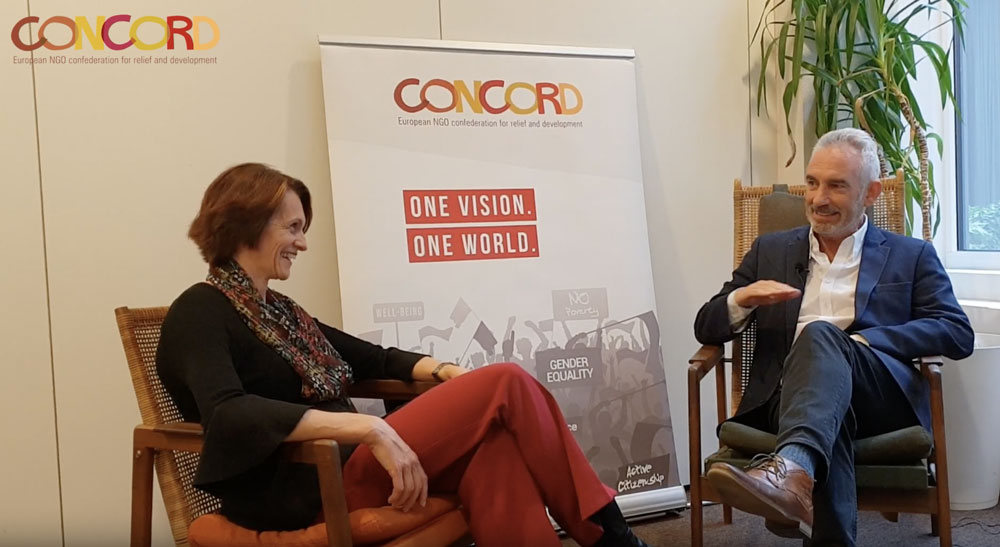
“Talking Development” podcasts are a series of podcasts developed by CONCORD Europe aiming at making development topics understandable and accessible to all. Here, Tim is discussing the politics and economics of the postgrowth challenge with Tanya Cox, Director of CONCORD, the European NGO confederation for relief and development.
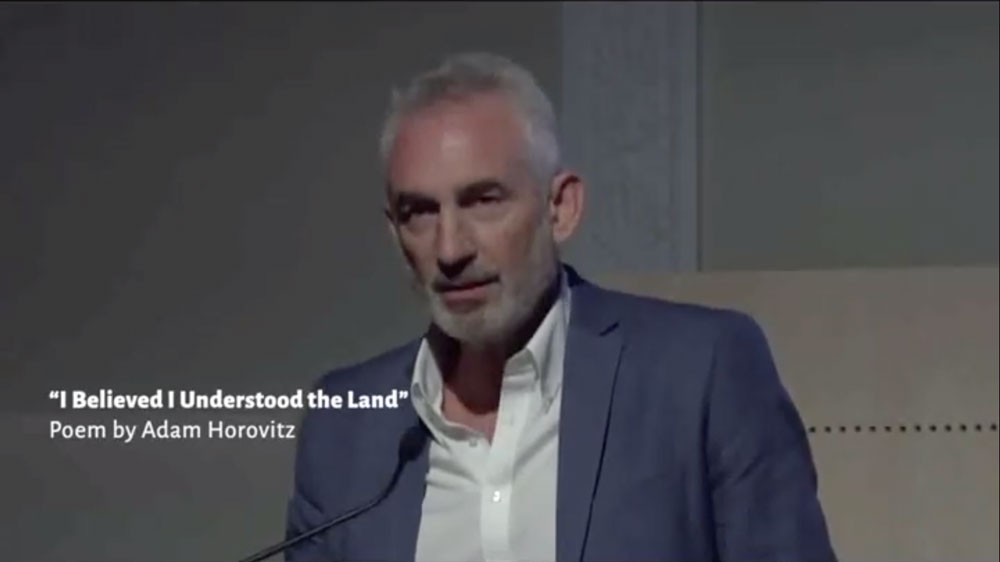
In July 2019, the RSA Food, Farming & Countryside Commission with CUSP director Tim Jackson as Commissioner and Chair of the Research Advisory Group have published their final report, calling for radical 10-year plan to transition to sustainable food system with more government support for healthy produce. The event opened with Tim's reading of a poem by Adam Horovitz, from the collection 'The Soil Never Sleeps'.
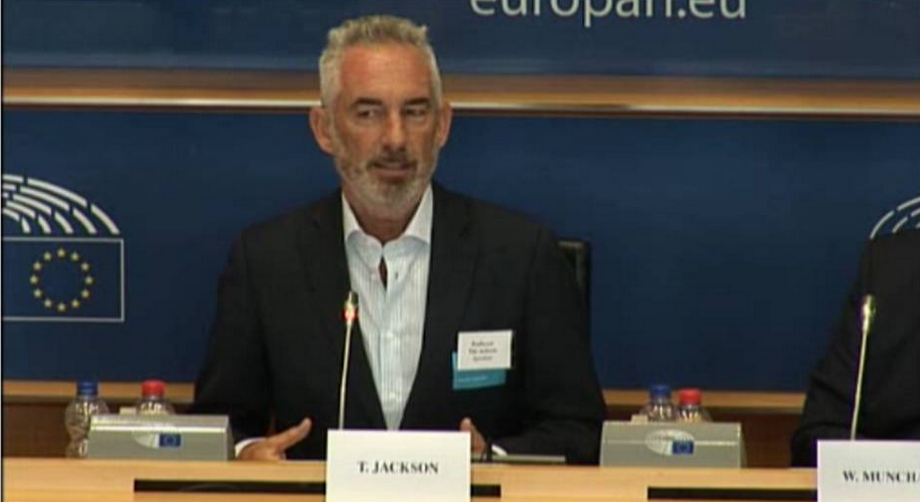
Earlier in 2019, the UK Treasury Select Committee launched an inquiry into the decarbonisation of the UK economy and green finance, set out to scrutinise the role of the Treasury department, regulators and financial services firms in supporting the UK Government’s climate change commitments. Drawing on recent CUSP reports, Tim Jackson submitted evidence.
At current rates of reduction, the UK fair carbon budget will be spent in just four years' time, Tim Jackson writes in his blog for The Conversation. "Every year that progress is delayed, the challenge only gets bigger", he argues, we don't only need a credible strategy on zero carbon targets, but also emission pathways, with a defined level of negative emission technologies.
Since its development in the 1930s, GDP has been the most widely used measure of the health and progress of an economy, being adopted as the principal policy objective of countless national and international bodies across the world. Its many shortcomings as a measure of progress are well documented, and the alternative indicators of progress developed in response to these shortcomings have been diverse and numerous. This paper synthesises the literature, highlighting the importance of context and purpose in determining what makes a ‘good’ indicator.
This briefing paper summarises the dilemma associated with using mainstream, macroeconomic models to guide disruptive, transformative change such as those that might occur under ‘deep decarbonisation’: a rapid transition to a net-zero carbon economy. Some form of macro-economic modelling framework is essential to enable policy-makers to exercise short- and long-term fiscal responsibility. Incremental models based on historical behaviour, however, are a poor guide to outcomes under circumstances of disruptive change.
While the consumerist approach to what living well can mean permeates traditional media, the extent to which it appears in people’s own depictions of the good life is unclear. Using multimodal discourse analysis, this article uses a sample of posts tagged #goodlife and variants collected on Instagram to explore which understandings of the good life can be found on the platform, and what their wider implications in the consumer society are.
This briefing paper addresses the question of when the UK should aim for zero (or net zero) carbon emissions. Tim Jackson is making the case for a (fair) zero carbon target of 2030, and calling for a policy strategy on emission pathways, with a defined level of negative emission technologies.
The RSA Food, Farming & Countryside Commission with CUSP director Tim Jackson as Commissioner and Chair of the Research Advisory Group have published their final report, calling for radical 10-year plan to transition to sustainable food system with more government support for healthy produce.
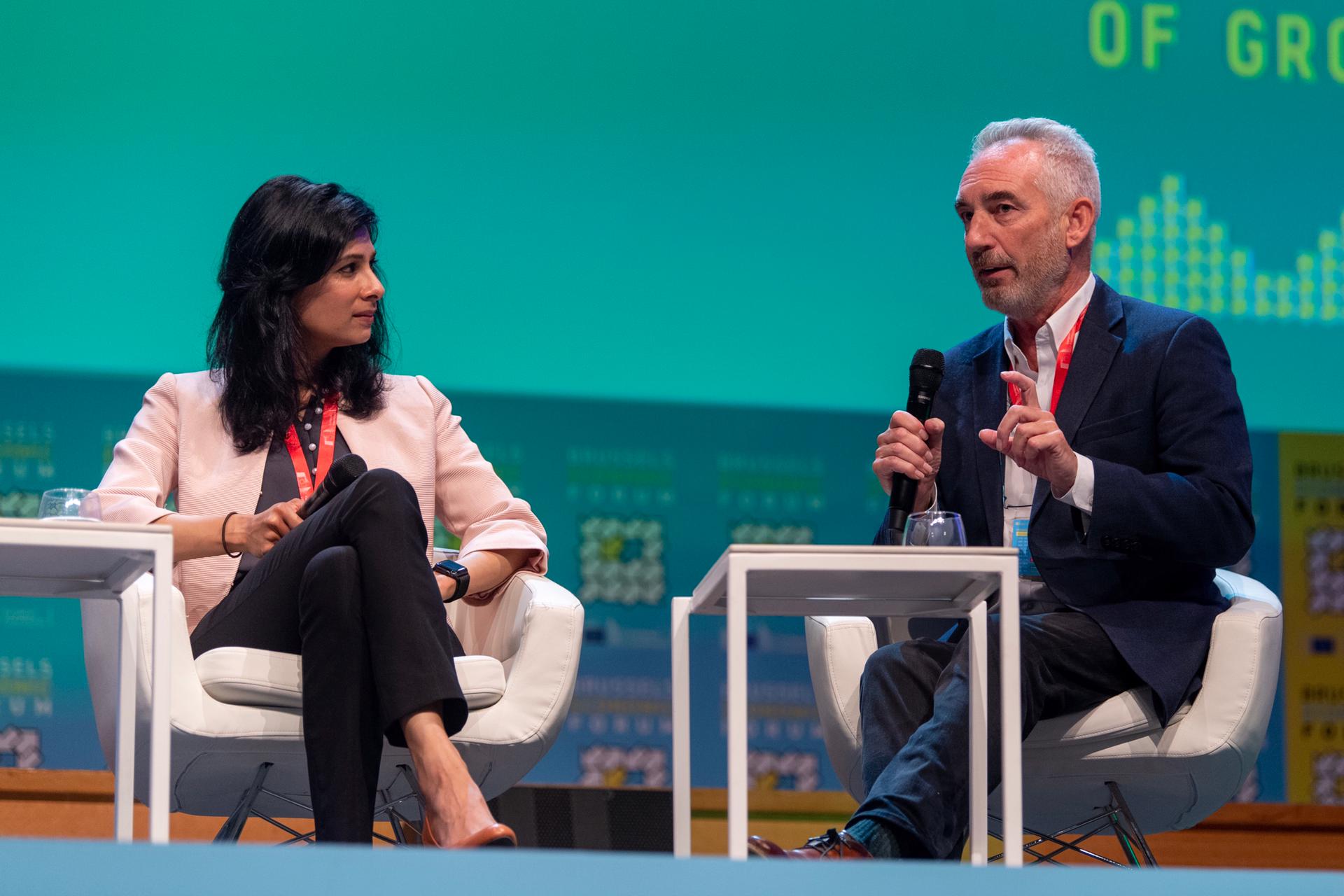
Tim Jackson in fierce debate with high-profile panel on prospects in the EU for reconciling economic growth with social cohesion, fairness and sustainability. Moderated by Viktoria Dendrinou (Bloomberg), co-discussants include Valdis Dombrovskis (Vice-President, European Commission), Nadia Calviño (Minister of Economy and Business, Spain), Gita Gopinath (Chief Economist, International Monetary Fund) and Riccardo Illy (Chairman, Gruppo Illy).
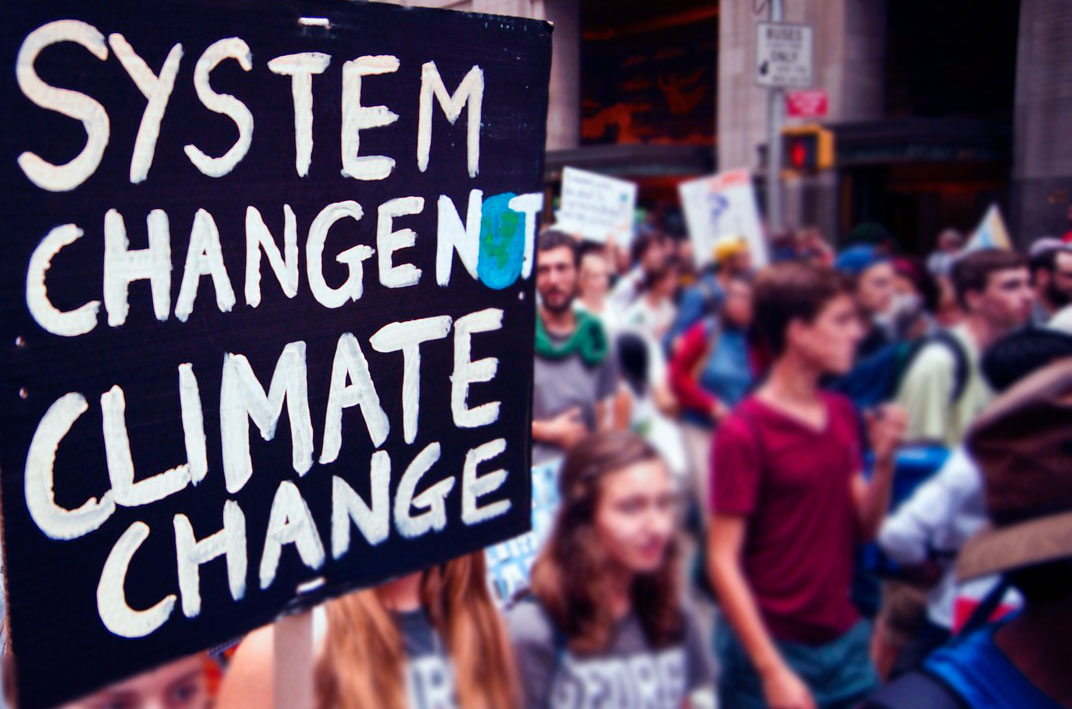
‘System change, not climate change’ is the mantra for a new politically-charged ecological activism. In the wake of two key economic conferences, Tim Jackson reflects on what this means for the financial and political stability of Europe.—"It matters not a jot that you do ‘whatever it takes’ to save the banks, if you fail to do whatever it takes to save the climate."
Few other topics are discussed as controversially as globalisation. Some associate with it their prosperity and unimagined opportunities for development. Others see ecological overexploitation and an increasing gap between rich and poor. This German documentary, produced for ZDF, is investigating the 'big fallacies' of globalisation. Available in German on the ZDF info website (until 17 April 2020).
“The circular economy is a very good idea, but it is a better idea when it is placed in the context of delivering prosperity, rather than aimed at increasing growth.” A conversation between Emanuele Di Francesco and Tim Jackson, discussing post-growth concepts of a circular economy, the limits of labour productivity and the dynamics of inequality.
The 2018 Post-Growth conference at the European Parliament marked a milestone in the history of the post-growth debate. In this interview, Riccardo Mastini discusses the possibilities and challenges for imagining a world beyond growth with two key post-growth thinkers—Tim Jackson and Giorgos Kallis. (The interview was conducted for the Green European Journal, and was originally published in two parts.)
In Autumn 2018, CUSP Director Tim Jackson responded to an essay by Michael Liebreich, sparking a month-long debate on social media. BBC Business Daily brought Tim and Michael together to discuss the ‘burning question’ face-to-face: Is eternal economic growth feasible (and desirable) on a finite planet?
The second in the series of briefing papers on building An Economy That Works explores inequality in the UK. It examines the evidence for rising inequality over the last fifty years, estimates the economic welfare lost to society from an unequal distribution of incomes and addresses the critical question of managing inequality in the context of declining growth rates.
The Entropy Law still matters. CUSP director Tim Jackson responds to Michael Liebreich’s essay on the ‘The secret of eternal growth’.—"Because we are intelligent does not mean that there is no such thing as limits. We cannot usefully ‘imagine’ the available carbon budget to be bigger than it actually is. Our ‘wonder’ will not in itself preserve the species lost precipitously in recent decades in the relentless pursuit of eternal growth."
Scientists, politicians, and policymakers gathering in Brussels for landmark conference: Hosted at the EU parliament, the multi-stakeholder event is exploring visions and solutions for a post-growth economy in Europe. An accompanying petition calling on the EU and its member states to plan for a postgrowth future is now published in leading newspapers all over Europe.
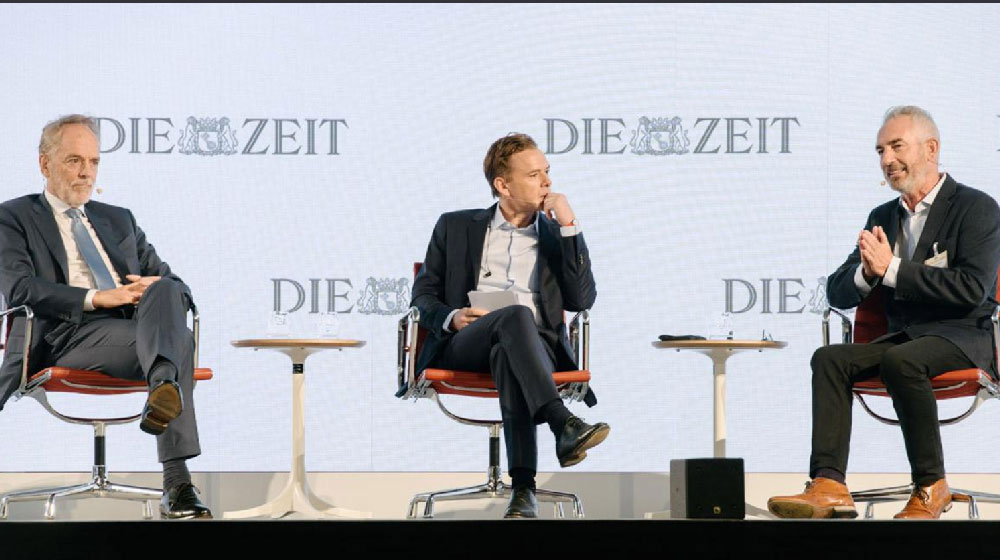
As part of the 2018 ZEIT Wirtschaftsforum, Tim Jackson and David Folkerts-Landau (Chief Economist, Deutsche Bank) were invited for a debate on the dilemma of growth, the relevance of GDP growth for wellbeing, and the political feasibility of a postgrowth agenda.
System dynamics model by Tim Jackson and Peter Victor is live now, developing sustainable prosperity scenarios for the Canadian economy out to 2067. LowGrow SFC is part of a suite of system dynamics models developed by Tim Jackson and Peter Victor, including SIGMA, which addresses the key challenge of inequality in the context of declining growth rates; and FALSTAFF, which explores the financial and economic dimensions of a post-growth economy.
This first in a series of briefing papers on building An Economy That Works explores the underlying phenomenon of ‘secular stagnation’ – a long-term decline in the rate of growth of the Gross Domestic Product (GDP). The paper examines the evidence, explores the causes and discusses the implications of what some now call the ‘new normal’.
This paper aims to contribute towards the development of a political economy of work fit for purpose in a world of social and environmental limits. In order to get beyond today’s dominant conceptions of work in a growth-based capitalism, Simon Mair, Angela Druckman and Tim Jackson explore the role of work in historical utopias.
Sluggish recovery in the wake of the financial crisis has revived discussion of a ‘secular stagnation’. These conditions have been blamed for rising inequality and political instability. Tim Jackson contests this view, pointing instead to a steadfast refusal to address the ‘post-growth challenge’.
Tim Jackson introduces his new CUSP working paper ‘The Post-Growth Challenge’, in which he discusses the state of advanced economies ten years after the crisis. Our attempts to prop up an ailing capitalism have increased inequality, hindered ecological innovation and undermined stability, he argues.
Ten years after the financial crisis, inequality in advanced economies is still rising. Tim Jackson presents the findings of a new CUSP working paper to explore potential solutions. "There are post-growth worlds in which social progress remains entirely possible."
Piketty argued that slow growth rates inevitably lead to rising inequality. If true, this hypothesis would pose serious challenges for a ‘post-growth’ society. If true, this hypothesis would pose serious challenges for a ‘post-growth’ society. Fiscal responses to this dilemma include Piketty’s own suggestion to tax capital assets and more recent suggestions to provide a universal basic income that would allow even the poorest in society to meet basic needs.
Why are we so obsessed with economic growth, knowing that it has devastating effects on our finite planet (and ultimately us)? The new documentary by Florian Opitz is looking for answers to this principal contradiction of our time and considers global capitalism from the perspective of those who run it.
Endless economic growth, long the rallying cry of the conventional paradigm, endangers our future. Ecological economist Tim Jackson, CUSP Director and author of Prosperity Without Growth, explores the need to envision a post-growth economy with Allen White, Senior Fellow at the Tellus Institute.